In Their Voices: The New York Student Lab
Education policy is often shaped by adult perspectives and recommendations, even though students are closest to the problems and can offer thoughtful solutions on what works for them. To truly work toward an equitable education system, we must not only empower students but also elevate their voices from their school buildings all the way to the state capitol. This begins with removing barriers to access and creating opportunities for young people to share their experiences and recommendations with education leaders and policymakers, ensuring they play an active role in shaping their education and its future.
Our Equity-Centered Approach
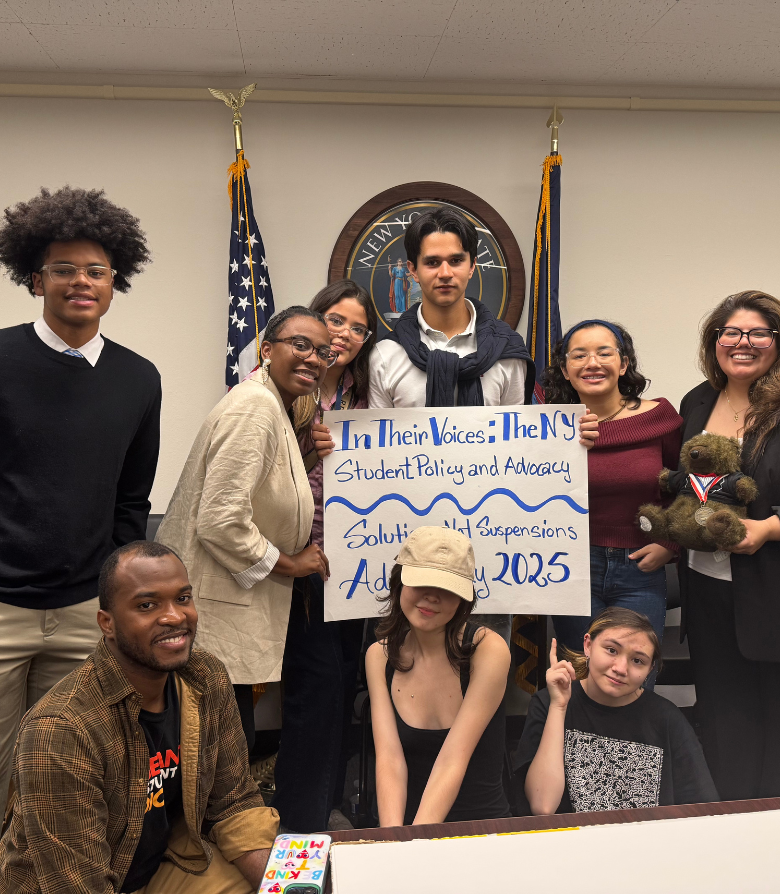
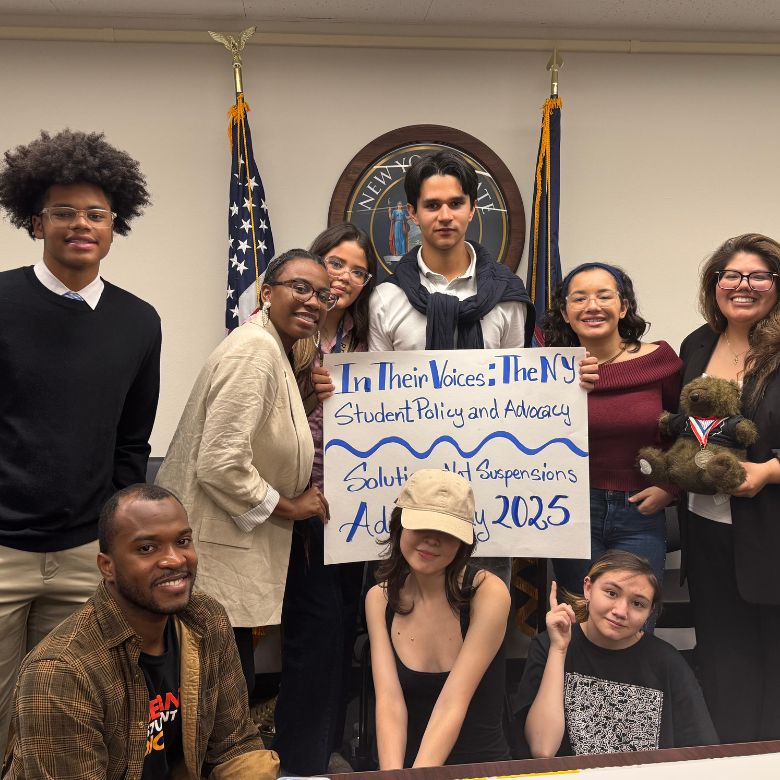
Through the Lab, we collaborate with ADELANTE Student Voices and the Brotherhood Sister Sol to develop high school students’ awareness of state-level education policy and advocacy, equipping them with the skills they need to advocate for themselves in high school and college. Students participate in monthly convenings that feature policy and advocacy training on issues related to education and have the opportunity to network with their peers and education leaders across New York State.
Meet The Students
Amaiya
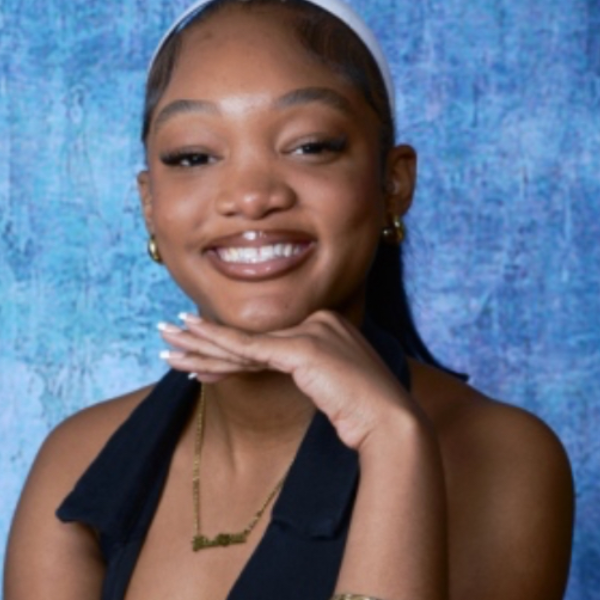
Amaiya is a high school student in Newburgh. She loves being creative in any work she does and is persistent when achieving her goals. Throughout her high school year, she has been involved in the P-TECH program, where she learns to navigate high school and college classes, as well as facing her fear of public speaking, challenges with friendships. and social challenges. Amaiya joined the Student Lab to help enforce education policies that can help students all over New York feel supported and comfortable in schools.
Why is student voice important?
Student voice matters because it allows students to share their different experiences, opinions and ideas to help make school a better place for all.
How can adults better meet your educational needs?
Adults can better meet students’ educational needs by listening to student opinions and ideas and creating a space where students feel comfortable to share anything with no judgment.
What do you want the future to look like?
I want my future to look full of success, wealth, and happiness. I want to be able to use technology to make things more accessible to different users.

Dulce
Dulce is a student in Peekskill, New York in the 10th grade. Dulce embodies creativity and is eager to learn as much as she can inside and outside of school. She wants to major in business and hopes to one day have a company of her own. A policy issue that she has experienced that affected her educational experience is not having enough resources in her school, such as programs or extracurriculars that support students’ growth. For example, Dulce believes there is not enough support for students that are new to the country. She joined the Student Lab in the hope that she can learn what student advocacy looks like.
Why is student voice important?
It is important because learning is what you do mostly of your time and you have to make sure that you don’t have any obstacles while doing it.
How can adults better meet your educational needs?
They better meet students’ educational needs by acknowledging what is wrong with the school environment or system and by asking the students.
What do you want the future to look like?
I want the future to look like safe place for everyone where everyone has their basic needs met.

Faith
Faith is a high school student from Long Island, New York. From as far back as she can remember, she has had a deep passion for advocating and uplifting the voices of others. Her extroverted and bubbly personality drives her to form meaningful and open-minded connections with people around her and tackle issues within her community such as bridging the gap in electoral knowledge and increasing civic engagement, as understands that policy can address all aspects of life. Her grandparents who fought for the right to vote regularly remind her the importance of advocating, stating that submitting a ballot or lobbying is powerful.
Faith has involved herself in her community – serving as a peer advocate for Nassau County’s Peer Diversion court, rehabilitating juvenile youth to prevent them from entering the justice system, serving as a member of the Nassau County Youth Democrat Coalition, and serving as Youth Representative for the Hempstead Prevention Coalition where she leads taboo topics regarding substance abuse and prevention measures. Faith loves public speaking, using her voice as a fighting force against prejudice and oppression.
Attending a Title 1 school, Faith understands the systemic gap in the education system along with the biases and experiences that come along with it. These experiences are what inspired Faith to join the Student Lab. She hopes that this initiative will expose her to like-minded student who care to be the change they want to see. One of her favorite things to say is that adults are wrong when they say kids don’t care to be involved in current events – they just need opportunities to make knowledge about these affairs accessible so they CAN care.
She hopes this opportunity will allow her to make knowledge about education accessible to students so that they can want to be involved in tailoring a system that should be designed for them to succeed. Beyond just speaking out, Faith is passionate about the “why” behind the issues; she looks forward to using research and data to provide a solid, evidence-based foundation for the advocacy she champions. She hopes to major in sociology and go on to law school where she will become a constitutional lawyer. By taking an approach through open mindedness, a love for problem solving, and a lot of empathy, she knows she is a powerhouse that will challenge the status quo and serve her community.
Why is student voice important?
In a world where adults dominate advocacy and policy spaces, young people provide a fresh and authentic expertise on issues that constantly evolve through generations such as the school climate, technology, and systemic gaps. Without our voices, solutions are often designed for a reality that doesn’t actually exist anymore and immediate problems go unnoticed.
How can adults better meet your educational needs?
Students want to be seen and heard. We want adults to remain involved in our education, supporting our path to success, but form partnerships instead of making decisions “for” us instead of “with” us. This may look like experimenting with various learning styles students may have or building a supportive environment that young people feel comfortable to make mistakes in and learn from them.
What do you want the future to look like?
I imagine a future where everyone regardless of social/economic status or identity has not only an equal voice but leads conversation with empathy and understanding. Our differences, our experiences, and our heritage are invaluable to starting important conversations and building solutions that tailor to the needs of every individual.
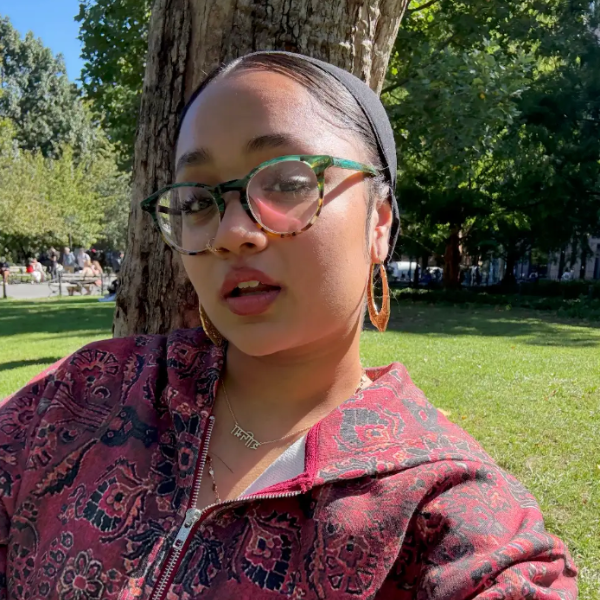
Hadia
Hadia is a high school senior born and raised in Brooklyn, New York. Growing up and attending school in the most segregated public school system in the country, she has experienced firsthand how punitive measures, over-policing, and zero-tolerance policies criminalize Black and Brown students in spaces meant to nurture their development.
Hadia is an organizer at the YA-YA Network, where she works alongside other students to challenge the school-to-prison pipeline and advocate for restorative, student-centered approaches to school safety and discipline.
She is also a youth organizer with DRUM (Desis Rising Up & Moving), where she works with the Bengali community, she was raised in to increase political engagement and build intergenerational power. Here, Hadia works alongside longtime organizers to protect immigrant communities and workers’ rights, while mobilizing South Asian communities to lead the social and policy changes that directly impact their lives.
She also works as a youth fellow in City Council Member Shahana Hanif’s office, where she promotes youth engagement in local government and helps bridge the gap between young people and city government.
Through grassroots organizing and campaigning, Hadia has developed a strong understanding of how real, lasting change is created from the ground up through the intersections of policy, political education, mutual aid, and community organizing. In the future, she plans to study international relations and take the skills she has built locally to the global stage, because the fight for justice does not stop at borders.
Hadia joined the Student Lab to continue this work alongside students across New York State who share similar experiences. She hopes to build collective power to hold elected officials accountable and ensure that students have the resources and opportunities to define their own futures. Hadia knows that education is the groundwork for justice and a prerequisite for sustainable social change.”
Why is student voice important?
Student voices matter because there is so much happening in the world that will permanently alter the course of our futures. When those in power fail to address these realities, as young people, we are entitled to the space to fight for a livable future for ourselves and future generations.
How can adults better meet your educational needs?
By understanding that young people are entering an increasingly unstable world, and giving us the grace to process, learn, and grow from our mistakes.
What do you want the future to look like?
I want to live in a future where my friends and family are not living in fear of being removed from their homes, where our failure to address climate issues does not lead to disaster, where I can trust that my children are cared for by the institutions meant to protect them, and where living in the city I grew up in is not only affordable, but sustainable.
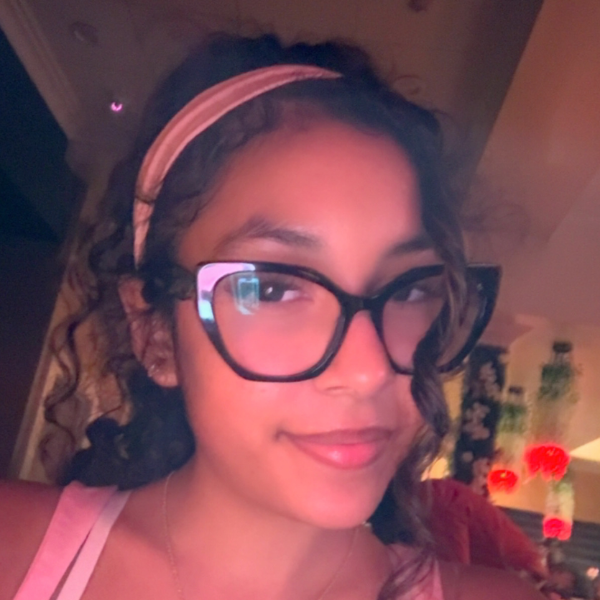
Mia
Mia is a high school student in Orangeburg, New York. She grew up in the Bronx for most of her life, surrounded by family. Five years ago, her family moved to Rockland County, where she experienced an identity crisis followed by significant personal growth as she navigated the cultural and social differences as a young Brown girl from the Bronx moving into a town that is predominately white. Her experience led her to a point in her life where she knows what she stands for and what she wants from life, leading to advocating for herself and other young people.
Mia witnessed firsthand how reliance on local property taxes for school funding can create significant inequities in resources and opportunities. For example, Mia experienced an underfunded school in the Bronx — where access to updated materials, extracurriculars, and activities like field trips was limited — to her new school in Rockland County, which had more abundant resources. While her new school offered more resources, Mia noticed that her old school has a particularly strong sense of community and support among students, teachers, and staff as opposed to her new environment, which exposed how deeply privilege can shape school culture and student experiences.
Why is student voice important?
Student voice is important because the students are the future. Our voices and opinions should matter most, especially when the conversation is about the future. People often think students don’t know any better than adults, but most times that’s not the case.
How can adults better meet your educational needs?
Adults can better meet educational needs by simply being respectful and supportive. Whether that means assisting with a problem, holding office hours, or just reaching out to the student if they seem to be struggling.
What do you want the future to look like?
I want the future to look peaceful, happy, and economically prosperous. I don’t want it to be super modernistic and futuristic, and I want it to be pure, wholesome, and natural.
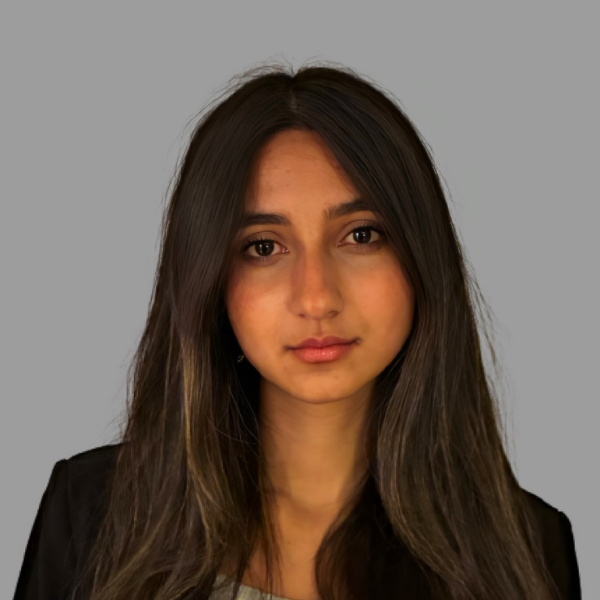
Ria
Ria is a student researcher and youth advocate working at the intersection of education, food security, and water access. Raised between New York City and the Indian cities of Lucknow and Hyderabad, she has developed a deep understanding of how environmental challenges shape students’ ability to learn, attend school consistently, and thrive. Her work focuses on ensuring that access to safe water and nutritious food is treated not as a peripheral issue, but as a foundational condition for equitable education.
Her commitment began with firsthand exposure to water scarcity during visits to family in India, where she saw how unreliable water access disrupted daily routines, including schooling. This experience later informed a middle school research project examining traditional water purification methods using aluminum potassium sulfate. After discovering that effectiveness depended on precise measurement, she founded Packet of Life, a youth-led initiative distributing pre-measured purification packets paired with multilingual educational materials. The project was designed not only to improve water quality but also to build scientific literacy and community awareness, allowing students and families to better understand the relationship between health, environment, and learning outcomes.
As Packet of Life expanded, Ria began to recognize that improving water safety alone was not enough to address educational inequities. During distribution efforts in drought-affected regions, she observed that students were missing school entirely due to water shortages and food insecurity. This realization motivated her to develop an AI-based prediction tool to help communities anticipate water crises and prepare accordingly. Her approach emphasizes local knowledge and community-driven solutions, reflecting her belief that sustainable educational progress depends on empowering families with tools that support resilience rather than imposing external directives.
In New York City, Ria has worked to address similar challenges in urban educational settings. Through her involvement with organizations focused on hunger relief and food redistribution, including work supporting weekend meal kit initiatives, she has helped ensure that students facing food insecurity have access to nutritious meals beyond the school week. Her work with food recovery programs has strengthened her understanding of how supply chains, community partnerships, and policy decisions influence whether students arrive at school ready to learn. These experiences have reinforced her commitment to integrating environmental sustainability with educational equity.
Looking ahead, Ria hopes to continue pursuing research and policy pathways that strengthen the link between environmental resilience and educational access. She is particularly interested in how water scarcity, and food systems influence attendance, cognitive development, and long-term academic outcomes. Her long-term goal is to help design global strategies that ensure every student has the basic resources necessary to learn, safe water, reliable nutrition, and stable educational environments.
Why is student voice important?
Student voice is important because students experience the realities of education systems every day and can identify barriers to learning that policymakers and administrators may overlook. When students are included in decision-making, as EdTrust-New York allows us to be, schools become more equitable, responsive, and effective in meeting the real needs of their communities.
How can adults better meet your educational needs?
Adults can better meet all students’ educational needs by listening to students as partners rather than recipients, especially when it comes to issues like food access, mental health, and real-world learning opportunities. Providing consistent support systems, including nutritious meal programs (which I’ve worked to secure) safe learning environments, and chances to engage in research or community work, allows students to focus on learning and reach their full potential.
What do you want the future to look like?
I want a future where no student has to choose between learning and meeting their basic needs, where access to safe water, nutritious food, and stable schools is guaranteed so all students can thrive. I also hope for education systems that treat young people as changemakers, giving them the tools and trust to help solve the challenges shaping their communities.
Ruth
Ruth (she/her) is a Venezuelan immigrant and high school student whose leadership is rooted in lived experience, resilience, and an unshakable commitment to justice. Having migrated twice and navigated multiple school systems, she has learned to adapt across cultures while developing a deep understanding of the complexities that shape identity, belonging, and opportunity.
Ruth’s early experiences with displacement, including living in an overcrowded shelter, along with exposure to political instability and economic hardship, did more than shape her perspective; they defined her purpose. As a young immigrant in environments with limited diversity, she has faced racism, xenophobia, and systemic barriers that are often dismissed or minimized. Rather than accepting silence, Ruth recognized these patterns as part of a broader reality affecting many students like her and chose to confront them.
She has since dedicated herself to transforming exclusion into action.
Ruth works to create spaces where students are not only included, but empowered to speak, question, and lead. She founded her school’s Debate Club to foster respectful dialogue, critical thinking, and student voice, while also taking on leadership roles as a Class Council representative, secretary of Student Council, and social media officer of Interact Club. Across her work, she emphasizes that student voice is essential. In a rapidly changing world, students bring perspectives and lived experiences that must be included in shaping educational systems and the future of society.
She is also the founder of Bridges of Inclusion, a civic initiative born from her direct experiences with discrimination and invisibility. What began as a class project has grown into a broader effort to challenge ignorance and build inclusive communities. Through this work, Ruth has collaborated with school leadership and community partners to translate essential resources for immigrant families, lead cultural education initiatives, and advocate for changes that better support diverse student populations. She believes that adults can better meet students’ educational needs by listening intentionally, creating supportive environments, and providing the tools necessary for students to succeed.
Beyond her school community, Ruth is deeply engaged in immigrant rights advocacy. Through her work with Columbia County Sanctuary Movement (CCSM), New York State Youth Leadership Council (NYSYLC), and Adelante Student Voices, along with other grassroots organizations, she has participated in protests, press conferences, and advocacy efforts, standing in defense of immigrant communities and calling for dignity, protection, and justice.
Ruth plans to study law and pursue a career in government, where she hopes to help create laws that protect and uplift marginalized communities. Her passion for history and activism continues to guide her work, as well as her desire to support those who are facing the same challenges she once experienced. She envisions a future where education is equitable, where communities are united rather than divided, and where policies are shaped with compassion and accountability. No matter where she goes, she remains committed to fighting for what is right, defending human rights, and standing alongside her community, which is where she finds both her purpose and her happiness.
Why is student voice important?
Student voice is important because students often say what needs to be said.
Their voices carry strength, honesty, and urgency. Students are able to recognize problems more quickly because they are directly experiencing them, and they are less likely to normalize injustice. Throughout history, student voices have played a critical role in social movements and have helped drive meaningful change. When students are heard, they bring awareness, challenge systems, and push for a better future.
How can adults better meet your educational needs?
I believe it is important for adults, especially educators, to see students as human beings before they see them as students. Empathy and understanding are essential. Students come from different backgrounds and experiences, and those realities should be acknowledged rather than judged. Adults can better support students by creating safe spaces where they feel respected, heard, and valued. Providing opportunities, showing patience, and taking the time to understand students before making assumptions can make a meaningful difference in how students learn and grow.
What do you want the future to look like?
I envision a future with more empathy, compassion, and accountability, and less corruption and abuse of power. I hope to see a world where people are more respectful, where everyone feels seen and heard, and where inclusion is a priority. I also want to see more young people involved in politics and more spaces created for youth to have a seat at the table, where their voices are truly valued and empowered. At the same time, I hope students are able to be more present in their lives, with fewer distractions, so they can better understand the world around them. It is important that we are aware, that we care, and that we are willing to stand up against injustice.

Shaina
Shaina is a high school in Brooklyn, where she is already building the foundation for a career at the intersection of law, advocacy, and medicine. A first-generation aspiring attorney and student of color, she approaches her education with intention, understanding that access to opportunity is both powerful and fragile.
Her daily schedule reflects ambition in motion. After a full academic day spanning nine periods, she transitions into leadership spaces, serving as a youth advocate intern at Children Citizens’ Committee New York, participating in peer mediation, training as a flag football student athlete, and working to establish a student-led club. Each commitment is intentional. Every experience is treated as a strategic step toward long-term advancement.
Programs inside and outside of school have played a defining role in her development. Exposure to enrichment initiatives, internships, and academic leadership opportunities has expanded her sense of possibility. These structured access points have strengthened her college and career readiness, clarified her professional goals, and reinforced her belief that opportunity can transform trajectory.
Her experience has also revealed systemic limitations. She has observed how grade level restrictions often determine eligibility for advanced experiences, regardless of a students’ readiness, skills, or motivation. She believes evaluation should extend beyond age or classification and instead incorporate demonstrated ability, written expression, and lived experience. For driven students, barriers tied strictly to grade level can delay growth and advancement.
Her interest in policy is personal. She recognizes that many students face academic pressure not because of a lack of ability, but because of limited guidance and structural uncertainty. She advocates for systems in which opportunity is not dependent on networks, but on preparation and initiative. In her view, education policy must balance equality and equity by expanding programs broadly while also ensuring targeted support for students who need it most.
Her career aspirations reflect this commitment to both impact and structure. She plans to pursue law, with particular interest in intellectual property or medical malpractice, while potentially integrating legal expertise with health care knowledge.
Above all, Shaina wants policymakers to understand that students like her exist in every borough and district, self-driven, motivated, and committed to growth. When given access, they do not simply participate; they excel.
She does not view opportunity as a privilege to receive, but as a responsibility to maximize. And she intends to use everyone she earns.
Why is student voice important?
Student voice is important because students have direct experiences with the systems that adults design, so their lived experiences reveal key factors and gaps that data cannot identify. When students are included in spaces where they can advocate, solutions become far more practical and rooted in real world needs rather than assumptions.
How can adults better meet your educational needs?
Adults can meet educational needs by recognizing what the youth need directly to support them with their academic and continuing lived experiences.
What do you want the future to look like?
I want the future to look like a system where opportunity becomes accessible, not selective and where access to mentorship, programs and leadership spaces are based on drive rather than background and data. Institutions who balance equity with excellence will provide students with drive with the assurance that students’ visions won’t be delayed by structural limitations.
More Resources
#MyHistoryMyFuture: Students Share Their Bold Visions for Tomorrow
Each year, we highlight students’ work and reflections on the impacts of history and its relevance to their generation through the #MyHistoryMyFuture digital campaign. The campaign encourages students to not only reflect on the past but to be proud of where they come from and take action to make their schools, communities, and the world a better place for future generations.
Congrats to our 2023-24 Equity Partnership Program grantees!
Each year, through our Equity Partnership Program, we provide technical assistance and grants to support advocacy capacity to community-based and parent-serving organizations. This year, we made changes to the program to deepen our impact on several key issues and are thrilled to announce eight organizations that will be taking on critical equity work that advances our policy priorities.
Students across New York convene to learn more about pathways after high school
Current college students led a discussion and held a space for high school students to ask them questions about what life after high school is like, as well as share their concerns and aspirations for the future with one another.
Student activists and Chancellor Young discuss what civic engagement means to them and share advice on how to lead change
In the final edition of the #OurReopening, students shifted the conversation from what schools can do to support them this year to how they can make change in their communities.
What ideas and solutions do students have for New York schools to support their mental health?
Last week, EdTrust-New York hosted the second of its series of student-led roundtables on school reopening. At the event, students from across from across New York State came together for #OurReopening: How Can Students Feel Safe and Supported Next Year? where they...
Students reflect on a year of remote learning and share ideas for reopening in student-led discussion
In the first of EdTrust-New York's student-led roundtable series, students from across New York State brought their voices forward for #OurReopening: Reshaping Our Education in a Post-Covid World. Alanna Middlebrooks, a high school student in Buffalo, led a dynamic...