The New York Campaign for Early Literacy
All children can learn to read with instruction aligned to the science of reading, yet many students are denied the right to read — especially Black, Latinx, and Native American students and those from low-income backgrounds.
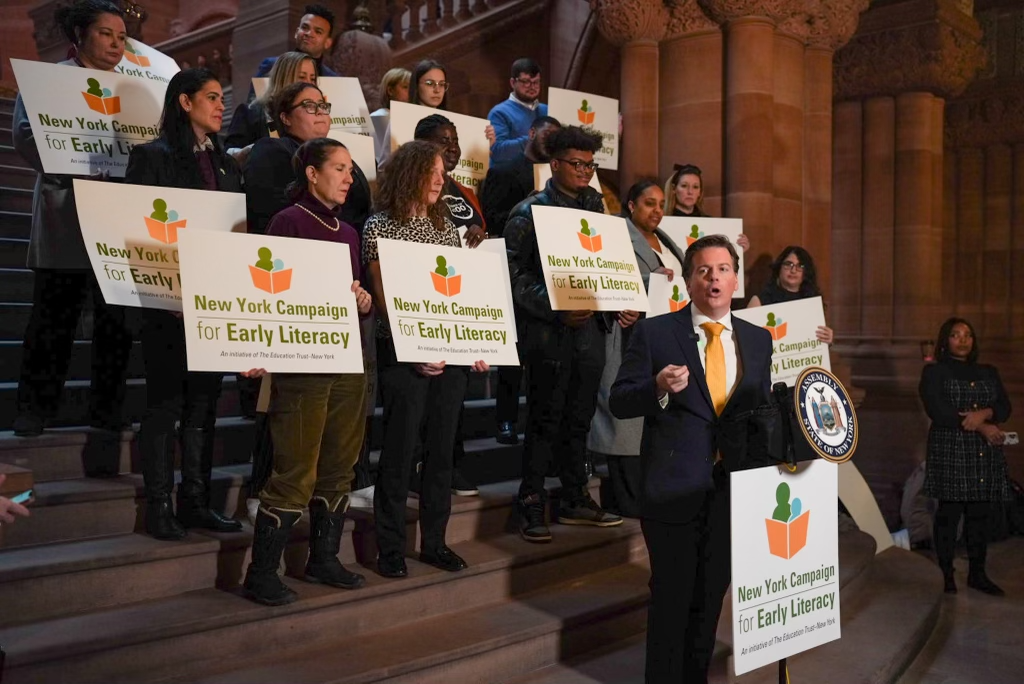
The New York Campaign for Early Literacy is a statewide movement designed to harness the collective voices of individuals and civil rights, education, parent, and nonprofit organizations to improve student reading outcomes through evidence-based instruction aligned with the science of reading. The Campaign is devised on the principle that reading is a civil and human right.

Our Equity-Centered Approach
The New York Campaign for Early Literacy seeks policy changes at the state and local levels that promote the use of instruction aligned with the science of reading. To improve reading outcomes and literacy skills in New York State, the Campaign advocates for:
- District-level adoption of instructional materials aligned to the science of reading.
- Professional learning so that all educators in kindergarten through eighth grade are trained in the science of reading.
- Awareness of the importance of emerging literacy for children ages 0-5 and the role it plays in ensuring students enter kindergarten prepared to succeed.
- District and state-level awareness and policies to support older students who are struggling with reading.
- Expansion of high-impact tutoring programs to address pandemic-related unfinished learning and support student reading skills.
- Public transparency and accountability to let families and other stakeholders know what curriculum districts are using to teach reading.
Check out news featuring the New York Campaign for Early Literacy here.

Latest Resource
Webinar: New York Campaign for Early Literacy Virtual Advocacy Day 2025
Parents, district leaders, and advocates came together to discuss the importance of implementing the science of reading in the classroom and the need for new investments in professional learning, curriculum, and teacher preparation.
Featured Reports and Resources Over the Years
Blog: New York Campaign for Early Literacy Members Speak on the Importance of Early Literacy

Report: The Role of Expanded Learning Programs in Improving Early Literacy Outcomes

Report: 2022-23 Western New York Reading Report Card

The New York Campaign for Early Literacy in the News
Data Snapshot
organizations and advocates engaged in the New York Campaign for Early Literacy.
secured for initial state investments for professional development for teachers.
More Resources
New York Campaign for Early Literacy Policy Agenda 2026
The Campaign is celebrating its second anniversary this year and is calling on state leaders to make literacy a top state priority in 2026 and beyond. While the Campaign is appreciative of recent policy developments and investments in early literacy by the Governor, Legislature, and New York State Education Department, we believe bold state leadership is needed to make New York a national leader on this critical education and civil rights issue.
EdTrust-New York Finds Progress in NY Literacy Curriculum Alignment, but Warns Disproven Practices Still Persist
EdTrust-New York released a new analysis today showing that New York State has made progress in shifting toward evidence-based literacy instruction under the 2024 Back to Basics law but significant gaps remain, leaving hundreds of thousands of students without full access to instruction aligned with the science of reading. The New York Campaign for Early Literacy (NYCEL) is featuring this analysis as part of its Visions and Voices Literacy Advocacy Day to highlight the urgent need for stronger state action to improve reading outcomes for all students.
It Takes a Village to Raise a Reader: Reflections from the Leading Literacy Summit
New York has taken important steps to advance evidence-based literacy instruction, but lasting impact depends on how well educators are supported in implementation. This blog explores key takeaways from the inaugural Leading Literacy Summit, highlighting the role of collaboration, educator training, and community engagement in building a statewide literacy ecosystem grounded in the science of reading.
EdTrust-New York Responds to Governor Hochul’s 2026 State of the State with Praise and Calls to Strengthen Educational Equity
Governor Kathy Hochul’s 2026 State of the State address includes several important proposals aimed at advancing educational equity, with a strong emphasis on supporting New York’s children and their families through universal child care, investments in the Statewide Longitudinal Data System (SLDS), higher education emergency aid, high-impact tutoring in reading and math, and professional learning aligned with the science of reading for in-service teachers.
New York Must Act Now to Address the Adolescent Literacy Crisis
In its new report titled “Every Grade Counts: The State of Adolescent Literacy in New York,” EdTrust-New York builds on its 2023 early literacy work and highlights the urgent need for bold state and local action. The report urges leaders to provide older students, who were never properly taught how to read in elementary school, with resources and targeted support aligned to the science of reading.
Every Grade Counts: The State of Adolescent Literacy in New York
While the state has invested in aligning early grades (K–3) with the science of reading, we warn that policymakers have overlooked middle and high school students and offer recommendations for state and district leaders to take action.