
Math
Foundational skills in math have a profound impact on the ability of students to succeed in school, college, and career. A strong foundation in math can help students develop the critical thinking and problem-solving skills necessary to access advanced coursework and, ultimately, high-paying careers, particularly in the growing Science, Technology, Engineering, and Math (STEM) fields.
Yet, the latest NAEP and state assessment data make clear that New York is facing a deepening math crisis, driven by decades of systemic inequity impacting Black, Latinx, Native American, Asian American, and Pacific Islander students, as well as students from low-income backgrounds.
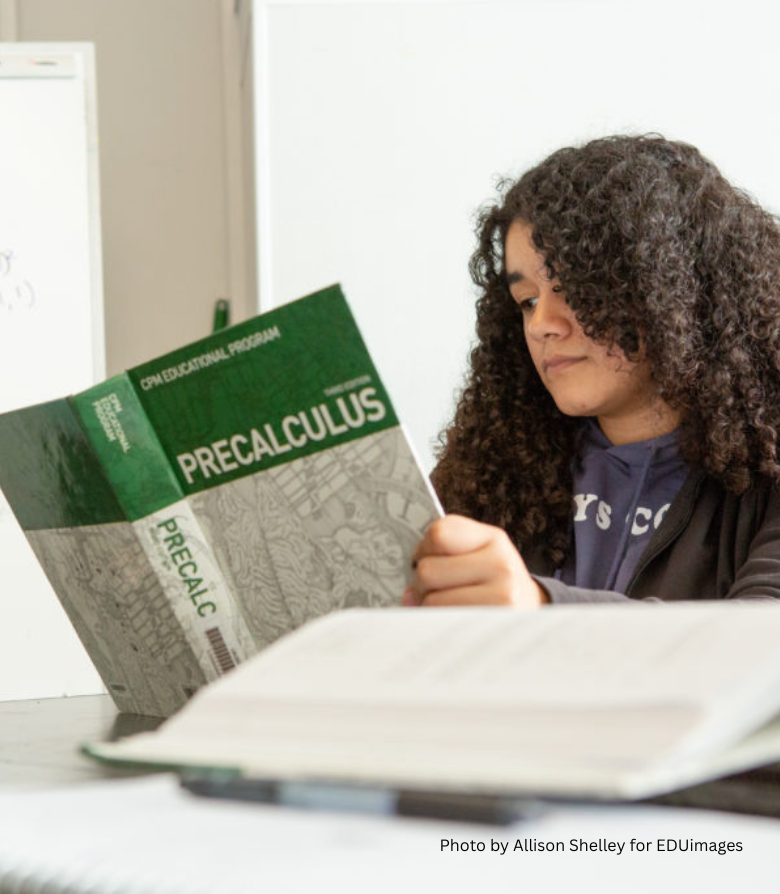
Our Equity-Centered Approach
We are driving awareness, urgency, and action to address math challenges statewide by advocating for robust educator coaching, high-impact tutoring, and automatic eighth-grade Algebra 1 enrollment. We also call on New York City Public Schools to sustain and expand NYC Solves, the districtwide initiative delivering high-quality, evidence-based math instruction.
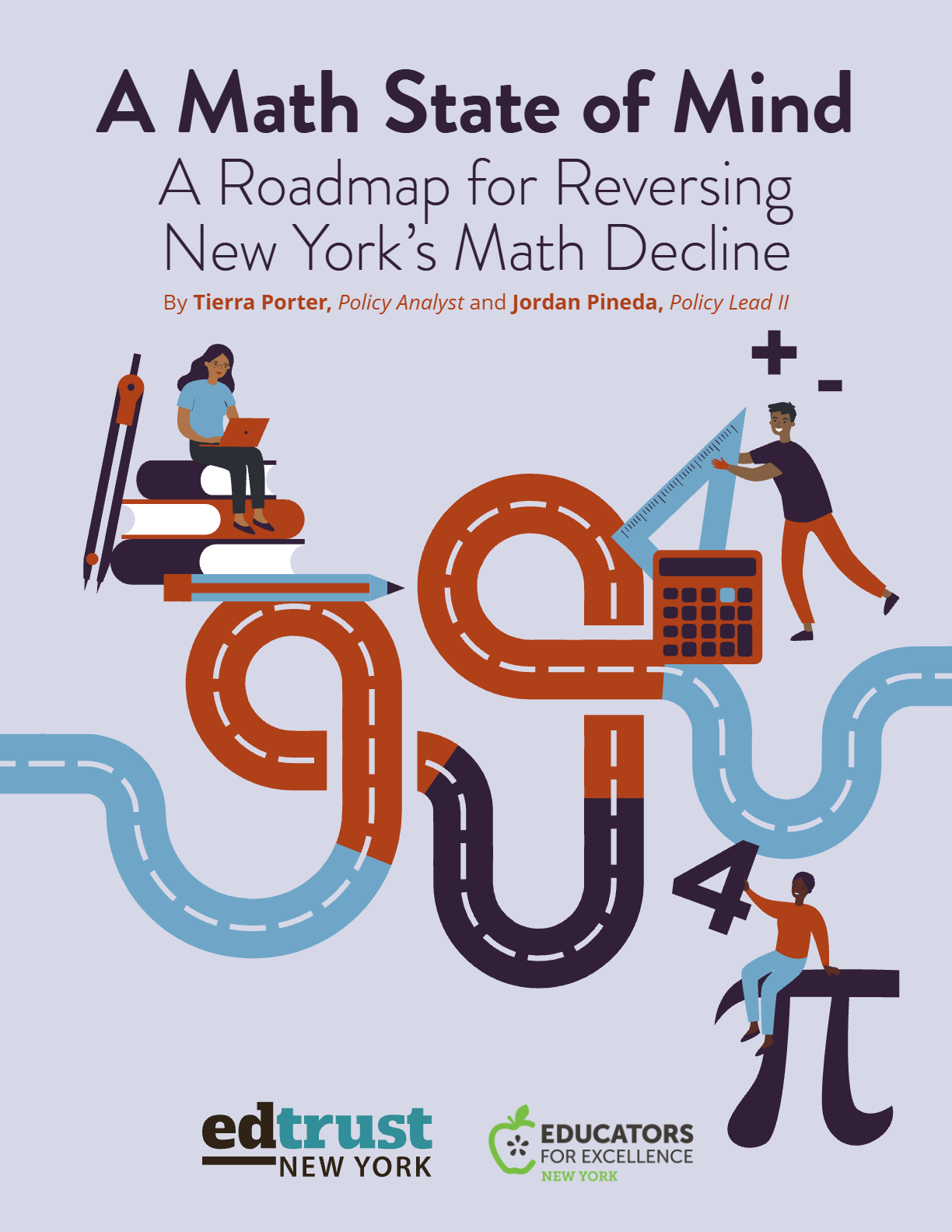
Latest Resource
A Math State of Mind: A Roadmap for Reversing New York’s Math Decline
New York faces an urgent math crisis, with student performance stagnant for more than a decade and persistent inequities affecting Black and Latinx students, multilingual learners, students with disabilities, and students from low-income backgrounds. A Math State of Mind identifies four interconnected pillars for a comprehensive statewide mathematics strategy aimed at strengthening high-quality instruction, expanding access to rigorous coursework, and providing targeted support to improve outcomes for all students.
Featured Reports and Resources Over the Years

EdTrust-New York Urges Action to Close Achievement Gaps and Scale Evidence-Based Practices

Statement: Mayor-elect Mamdani Must Prioritize Equity in NYC Schools

Education Platform for New York City
Data Snapshot
In the 2024 NAEP test results, only
%
of 4th grade students scored proficient in math, including only 22% of Black students and 26% Latinx students.
New York ranks
37th in the nation
in 4th grade math, a decline from its position two decades ago. In fact, NAEP trend data show that New York’s fourth-grade math performance is no higher than it was in 1998.
More Resources
EdTrust-New York and Educators for Excellence Call for Action on New York’s Math Crisis
New York has a math problem, and students cannot afford to wait another year for the state to address it. EdTrust-New York and Educators for Excellence (E4E) are calling for stronger, more coordinated state action through their new report, “A Math State of Mind: A Roadmap for Reversing New York’s Math Decline.” The report outlines four key priorities to improve math outcomes and advance equity across New York.
A Math State of Mind A Roadmap for Reversing New York’s Math Decline
New York faces an urgent math crisis, with student performance stagnant for more than a decade and persistent inequities affecting Black and Latinx students, multilingual learners, students with disabilities, and students from low-income backgrounds. This report identifies four interconnected pillars for a comprehensive statewide mathematics strategy aimed at strengthening high-quality instruction, expanding access to rigorous coursework, and providing targeted support to improve outcomes for all students.
Testimony for New York City Council – Fiscal Year 27 Preliminary Budget – Education
As the largest district in the state and nation, serving nearly 1 million students, New York City Public Schools (NYCPS) is a key focus of EdTrust-New York’s commitment to advancing equity-focused educational efforts across the state. Such investments are even more critical this year due to federal funding cuts and attacks on critical educational equity programs.
New Report Finds Thousands of Qualified New York Students “Proficient and Passed Over” for Eighth Grade Algebra 1
The New York Equity Coalition, convened by EdTrust-New York, released a new report, Proficient and Passed Over: Disparities in Eighth Grade Algebra 1 Enrollment, showing that New York schools deny tens of thousands of academically prepared students access to eighth grade Algebra 1, an essential accelerated gateway to college and career success.
Proficient and Passed Over: Disparities in Eighth Grade Algebra 1 Enrollment
Algebra 1 is a key gateway to college and career success, but many academically prepared students—especially Black, Latinx, Native American, and low-income students—lack equitable access. EdTrust-New York finds persistent gaps in eighth grade Algebra 1 enrollment even among students who are ready.
EdTrust-New York Statement on Assembly and Senate One-House Budget Proposals
EdTrust-New York welcomes the Assembly and Senate one-house budget bills and appreciates that both include support for several key educational equity priorities. These proposals invest in initiatives included in the Governor’s Executive Budget, such as universal child care, evidence-based math instruction, professional learning for math and reading educators, high-impact tutoring in math and reading, emergency aid for SUNY and CUNY students, and expanded financial aid through broader eligibility for the state’s Tuition Assistance Program.
New Report Finds College in High School Programs Expanding Access and Boosting Graduation Rates Across New York State
A new report released by EdTrust-New York, Pathways to Opportunity: The Growth and Impact of College in High School Programs Across New York State, highlights significant growth in college in high school participation and strong graduation outcomes for students across the state, particularly for students of color, students from low-income backgrounds, multilingual learners, and students with disabilities.
EdTrust-New York Responds to Governor Hochul’s 2026 State of the State with Praise and Calls to Strengthen Educational Equity
Governor Kathy Hochul’s 2026 State of the State address includes several important proposals aimed at advancing educational equity, with a strong emphasis on supporting New York’s children and their families through universal child care, investments in the Statewide Longitudinal Data System (SLDS), higher education emergency aid, high-impact tutoring in reading and math, and professional learning aligned with the science of reading for in-service teachers.
EdTrust-New York Releases New Statewide Poll Showing Families Deeply Concerned About Math Instruction, Access, and Equity
The findings underscore an urgent need for statewide action to strengthen math teaching and learning, particularly for students of color, students from low-income backgrounds, students with disabilities, and English Language Learners/Multilingual Learners (ELLs/MLLs). The state can do this in part by expanding programs like NYC Solves, which provide evidence-based math curriculum and related teacher professional development to ensure that all NYC students learn foundational math skills.
Solving the Equation: What Families Think About Math Instruction, Access, and Opportunity in New York
A new statewide parent poll reveals deep concerns about math instruction, inequitable access to advanced coursework, and gaps in support for students across New York, underscoring the need for stronger, evidence-based math teaching and learning statewide.