Advancing Equity for All K-12 New York Students
Kindergarten through high school are foundational years in a students’ educational journey. Yet many students across New York State — especially students from low-income backgrounds and students of color — do not have access to equitable resources and diverse learning environments to reach their full potential.
From eliminating inequity in school funding to improving educator diversity in New York schools, New York State must do more. On this page you will find resources curated for education leaders, state policymakers, and parents to advance equity in New York’s K-12 public education system.
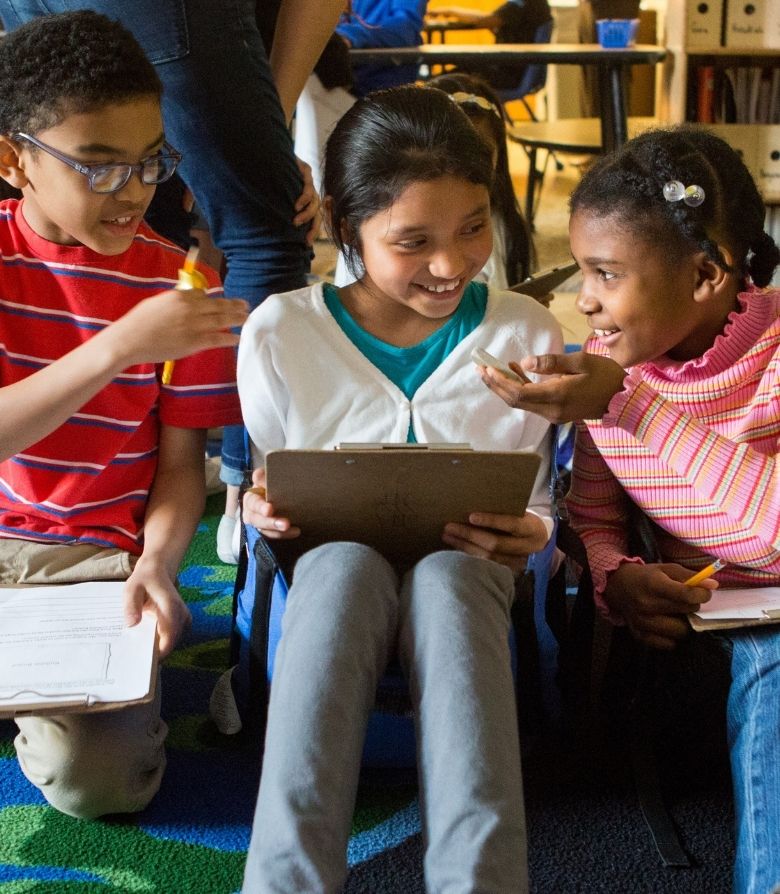
Photo by Allison Shelley for EDUimages
Equal is not equitable: New York school funding
School funding is important for student success. How districts and schools decide to spend funds can make a critical difference in whether all students receive the resources and support they need to have a great learning experience – ultimately putting them on the path to a bright future.
Our resources will help you learn about how much funding schools across New York get and how you can advocate for more equitable spending.
Warning Bells: The Growing Proficiency Crisis Among New York Students
Our analysis of the 2022-23 New York State Education Department (NYSED) assessments reveals troubling outcomes for New York’s students overall, and inequitable results for students from low-income backgrounds and students of color.
This report shares recommendations for education leaders to raise student outcomes in math and English language arts in New York State, as well as improve assessments by focusing on racial and cultural inclusivity of the tests; providing students with high-quality literacy and math curricula; increasing transparency and timeliness around the release of assessment data; and more.
New York State’s Early Literacy Crisis
Despite recent student outcome data and the impact of pandemic-related school closures on reading skills, state and local leaders have neglected to boldly address New York’s early literacy crisis with deliberate urgency.
Our report, A Call to Action: The State of Early Literacy in New York, elevates non-evidence-based practices in the teaching of reading, and shares recommendations on how state and local leaders can address New York’s poor reading outcomes by anchoring reading and literacy instruction in the science of reading.
Enrollment Trends in New York State
Our analysis of final enrollment data of NYS public schools for the school year 2022-2023 finds that while enrollment is still trending down and public schools have had large enrollment losses, these declines are slowing down from their pandemic highs. Statewide and in the largest school districts, enrollment losses were greatest in the 2020-2021 school year, but have since largely reverted to their pre-pandemic levels this past school year.
The New York Financial Aid for College Completion Project
High schools can make a significant difference in helping students from low-income backgrounds, immigrant, and first-generation college hopefuls complete the Free Application for Federal Student Aid (FAFSA) and other state financial aid applications. The New York FAFSA Completion Project is a statewide campaign to encourage public high schools to increase the proportion of eligible students from low-income backgrounds who complete the FAFSA.
Our Financial Aid for College: High School Toolkit provides an opportunity to compete in the challenge and all the resources schools need to support students and families to apply for every dollar of financial aid for which they qualify.

Improving Data and Transparency in Teacher Preparation Programs
Teacher preparation programs play a vital role in the teacher pipeline, and ensuring access to educators who are well-prepared, supported, and diverse educators to improve equity and achievement in New York State’s public schools.
Our Educator Equity Snapshot online data tool allows users to explore data about how school districts and higher education institutions are communicating their needs and priorities to each other and to future educators.
New York’s Educator Diversity Crisis
New York’s educator workforce does not come close to representing the rich diversity of the state’s students, leaving many Latinx and Black students without access to teachers or school leaders of the same race or ethnicity.
To and Through: From High School to College Success
Every student deserves a K-12 education that prepares them for college, careers, and active citizenship. This includes a high school experience with excellent instruction and strong support. Our interactive data tool highlights the most important measure of college readiness: whether high school graduates who enroll in college actually persist and ultimately earn a college degree or certificate.
The Latest From Ed Trust-New York
EdTrust-New York Analysis Finds New York Graduation Rates Falling as Readiness Concerns Grow
EdTrust-New York today released a new report, The Readiness Question: What Falling Graduation Rates Mean for New York’s Future, showing that New York’s high school graduation rate fell from 87% in 2022 to 85% in 2025. That two-point drop marks the largest year-over-year decline in two decades and reveals persistent inequities in educational opportunities and outcomes.
New York Must Build Guardrails to Ensure Workforce Pell Expands Opportunity
On July 1, 2026, the federal government launched Workforce Pell nationwide. The policy expands Pell Grant eligibility to students enrolled in short-term workforce training programs and opens the door for more students from low-income backgrounds to access career-focused credentials in high-demand industries without paying entirely out of pocket.
EdTrust-New York Highlights Proven Strategies to Improve Literacy Outcomes for Multilingual Learners Across New York
EdTrust-New York today released “Scaling What Works in Multilingual Literacy,” a new report that highlights proven strategies to improve literacy outcomes for multilingual learners and calls on New York policymakers to scale evidence-based practices that help more students become confident readers and writers.